


What is polyester membrane?
Introduction to polyester membrane
In the realm of modern construction and industrial applications, ensuring the longevity and durability of structures is paramount. One material that has gained prominence in achieving this goal is the polyester membrane. Often lauded for its resilience and versatility, polyester membrane plays a crucial role in waterproofing systems and several other applications. This article delves into the intricacies of what a polyester membrane is, its composition, applications, and why it stands out among other materials. Additionally, we will provide insights into its cost considerations and user feedback, all while highlighting its availability from wholesale polyester membrane suppliers, manufacturers, and factories.
Material Composition and Properties
● Composition of Woven Polyester Fabric
A polyester membrane is essentially a fabric made from tightly woven polyester threads. This composition grants it several advantageous properties, including high tensile strength, flexibility, and resistance to various environmental factors. Polyester itself is a synthetic polymer derived from petrochemical processes, which ensures consistent quality and performance.
● Durability and Strength Attributes
The woven nature of polyester fabric imbues the membrane with exceptional durability and strength. It can withstand significant stress and strain without tearing or deforming. This robust nature makes it particularly suitable for applications requiring long-term performance and reliability. Moreover, the membrane's resistance to UV radiation and chemicals further enhances its lifespan when used in harsh environments.
Applications in Waterproofing Systems
● Integration with R400 Rubber and Non-Skid Products
One of the primary applications of polyester membrane is in waterproofing systems, where it is often paired with products like R400 Rubber or R400 Non-Skid. When applied correctly, the membrane is embedded into the liquid waterproofing layer, creating a seamless and highly effective barrier against water ingress. This integration not only enhances the waterproofing capabilities but also provides a durable surface that can withstand various physical impacts.
● Advantages in Waterproofing Applications
The use of polyester membrane in waterproofing systems offers several advantages. Its high tensile strength and flexibility ensure that it can accommodate structural movements without compromising the integrity of the waterproof barrier. Additionally, its resistance to ponding water makes it ideal for flat roofs and other areas where water accumulation is a concern. Overall, incorporating polyester membrane into waterproofing systems significantly extends the lifespan and performance of the structures it protects.
Installation and Application Process
● Steps for Applying Polyester Membrane
Installing a polyester membrane involves a series of well-defined steps to ensure optimal performance. First, the surface to be waterproofed must be thoroughly cleaned and prepared. This may involve removing any debris, dust, or previous coatings that could interfere with adhesion.
Once the surface is ready, a layer of liquid waterproofing agent, such as R400 Rubber, is applied. While this layer is still wet, the polyester membrane is carefully laid onto it, ensuring that it is fully embedded without any air pockets or wrinkles. Additional layers of the liquid waterproofing agent are then applied on top of the membrane to create a cohesive and robust barrier.
● Embedding Fabric into the Waterproofing Layer
The key to the effectiveness of the polyester membrane lies in its proper embedding into the waterproofing layer. This process ensures that the membrane is fully integrated with the waterproofing agent, creating a continuous and impermeable barrier. Care must be taken to ensure that the membrane is evenly coated and that all edges and seams are adequately covered to prevent any potential weak points.
Size and Dimension Variants
● Available Sizes and Typologies
Polyester membranes come in various sizes and dimensions to suit different applications and project requirements. Common sizes include rolls of 100 yards by 42 inches, which cover a substantial area of 1,000 square feet, and smaller sections like 1 foot by 42 inches for more precise applications. These variations allow for flexibility in use, whether for large-scale industrial projects or smaller residential installations.
● Suitability for Different Project Scales
The availability of different sizes and typologies makes polyester membrane a versatile choice for projects of all scales. For large commercial or industrial applications, the extensive coverage of wide rolls ensures efficient installation with minimal seams. On the other hand, smaller size options cater to detailed work and repairs, providing the same level of durability and waterproofing effectiveness.
Performance Under Stress Conditions
● Resistance to Ponding Water
One of the standout features of polyester membrane is its exceptional resistance to ponding water. In scenarios where water tends to accumulate, such as flat roofs or areas with poor drainage, the membrane maintains its integrity and prevents water ingress. This resistance is crucial in avoiding water-related damages and prolonging the lifespan of the structure.
● Longevity and Maintenance
Polyester membrane's resistance to UV radiation, chemicals, and physical wear ensures a long service life with minimal maintenance requirements. Once installed, the membrane provides a reliable waterproof barrier that requires little upkeep, making it a cost-effective solution for long-term protection. Regular inspections and minor repairs, if needed, can further enhance its longevity.
Comparative Analysis with Other Membranes
● Polyester Membrane vs. Other Waterproofing Materials
When compared to other waterproofing materials, polyester membrane offers several distinct advantages. Unlike bitumen-based waterproofing systems, polyester membrane is more flexible and less prone to cracking under temperature fluctuations. Additionally, it provides a seamless barrier, unlike sheet-based materials that may have joints or seams susceptible to leaks.
● Benefits and Limitations
While polyester membrane boasts numerous benefits, it is essential to consider its limitations. For instance, its installation requires a precise application process to ensure proper embedding and adhesion. However, when installed correctly, the benefits far outweigh any potential drawbacks, making it a preferred choice for many professionals in the industry.
Concluding Remarks
● Summary of Key Points
In summary, polyester membrane is a highly durable and versatile material used extensively in waterproofing systems and various other applications. Its composition of tightly woven polyester fabric grants it exceptional strength, flexibility, and resistance to environmental factors. When integrated with liquid waterproofing agents like R400 Rubber, the membrane provides a seamless and robust barrier against water ingress.
● Final Thoughts on the Utility of Polyester Membrane
Overall, the utility of polyester membrane in construction and industrial applications cannot be overstated. Its ability to withstand ponding water, resist UV radiation and chemicals, and provide long-lasting performance makes it an invaluable asset for any project. By understanding its properties, applications, and cost considerations, professionals can make informed decisions to enhance the durability and reliability of their structures.
About Nanxiong Polymer
Nanxiong Polymer inherits the core values of the Nanliang group, emphasizing respect for life and environmental care. Nanliang International Co., Ltd. Jiaxing Branch incorporates elements like "Sharing results with employees" into its corporate vision. The company is dedicated to continuous innovation, experience inheritance, and customer-centric development. Nanxiong Polymer's products span personal safety, automotive, and textile industries, utilizing special fibers and polymer technologies. Certified by ISO 9001 and ISO 14001, and recognized for green material innovation, Nanxiong Polymer collaborates with global brands like NIKE and ADIDAS to develop cutting-edge products.

Featured News
-
 Versatile and Durable Solution for Various Industries
In the realm of flexible and high-performance films, Thermoplastic Polyurethane (TPU) film has emerged as a versatile and durable material with a wide range of applications. TPU film combines the exce...
-
 What is TPU film made of?
TPU (thermoplastic polyurethane) film is a type of polymer film that is widely used in various industries such as textiles, packaging, automotive, and medical. TPU film is known for its exceptional ph...
-
 Do you know the advantages of these 10 TPU films?
It is precisely because of the many advantages of TPU film that it has a wide range of applications. For example, the advantages of TPU film are better in some clothing, such as shoe upper linings, th...
-
 TPU film manufacturers: the momentum of TPU materials
Tpu material is a practical material, the momentum of development in recent years is also relatively strong, and has gradually replaced PVC and other rubber materials, because TPU material aging resis...
-
 Comparison with other similar films
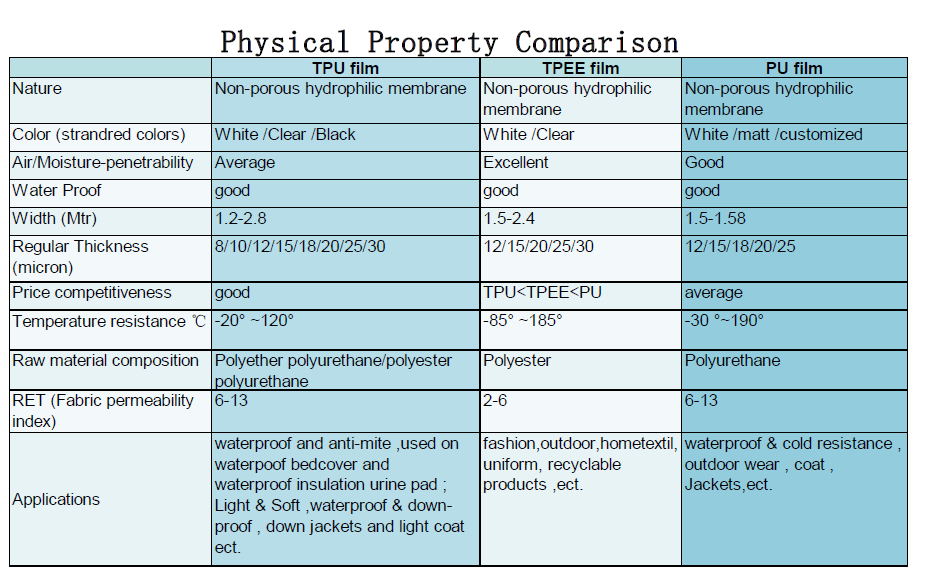
TPU,the abbreviation of "Thermoplastic Polyurethane", it has excellent high tension, high tensile strength, toughness and aging resistance. It is a mature environmentally friendly material, one of the...
-
 Advantages of TPEE film
TPEE film is a non-porous hydrophilic film made of thermoplastic elastomer,a kind of PE(Polyethylene terephthalate) film.It has excellent moisture permeability and high waterproof strength,after lamin...



Copyright © Jiaxing Nanxiong Polymer Co., Ltd.TPU Film Manufacturer